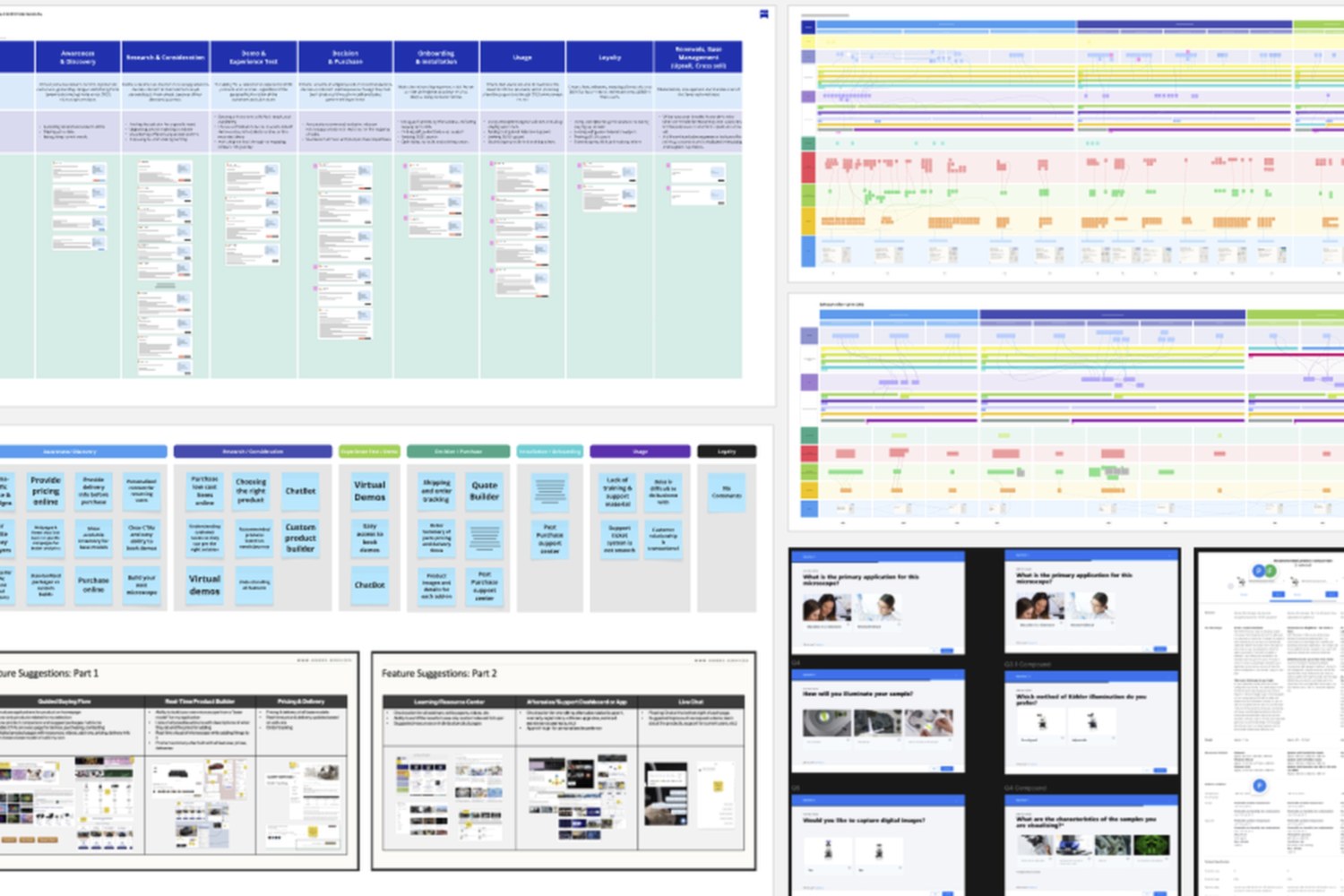
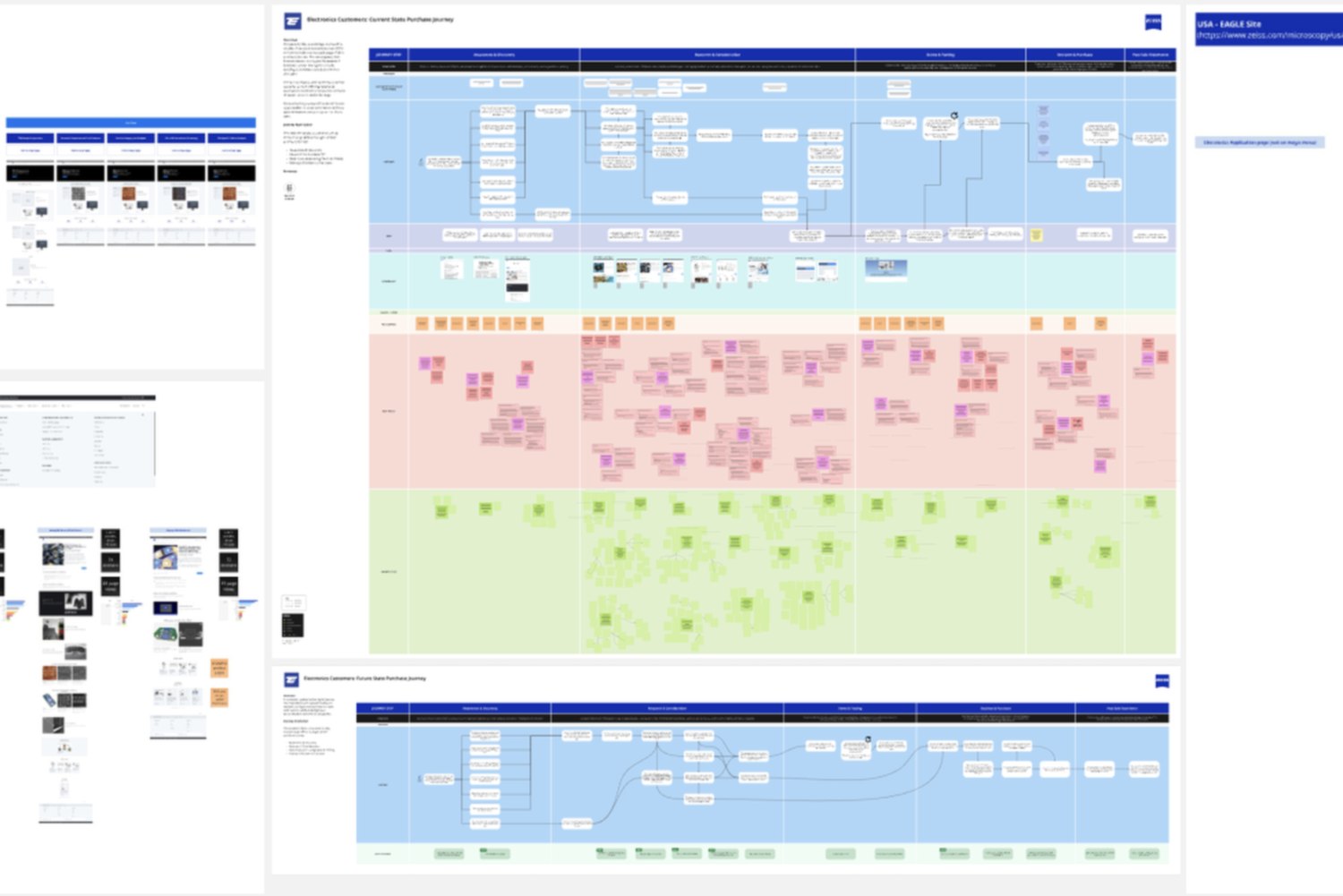
Most digital programmes fail in the gap between the research and the release.
I have spent twenty years working on both sides of that gap. In discovery I plan the research, run the stakeholder and customer interviews, and turn what comes back into a service blueprint senior leadership can act on. In delivery I take the same material and become the product and requirements owner — running the board and the standups, writing the features, stories and acceptance criteria, iterating prototypes with designers, and prioritising with client leadership until the thing is actually live.
What stays constant is the kind of problem: complicated products, considered purchases, several people in the decision, and an organisation that knows what it sells but not how its customers buy. The disciplines vary by engagement. The problem rarely does.
That continuity is the point. Strategy that nobody can build is an expensive document, and delivery without evidence behind it is guesswork. Holding both means the trade-offs get made in the open, with the client, rather than quietly disappearing somewhere between a recommendation and a sprint.
My background is unusually broad for a consultant — biochemistry, then Tesco, then supply chain and retail operations, then digital. It means I am comfortable with an operating model, a distribution centre and a commerce platform, and comfortable talking to a shop floor and a board on the same day.