The phases
Setup to delivery
-
01
Setup
Agree what the engagement is for before any research starts.
Activities
- Scope and success criteria agreed with the sponsor
- Data request issued in week one
- Stakeholder map across business, ops and tech
- Research plan, and the questions it must answer
- Hypotheses to test, rather than assumptions to confirm
- Governance, cadence and reporting line
The data request goes out first — it takes longer to come back than anyone expects, and stalls the analysis if it waits.
Example output
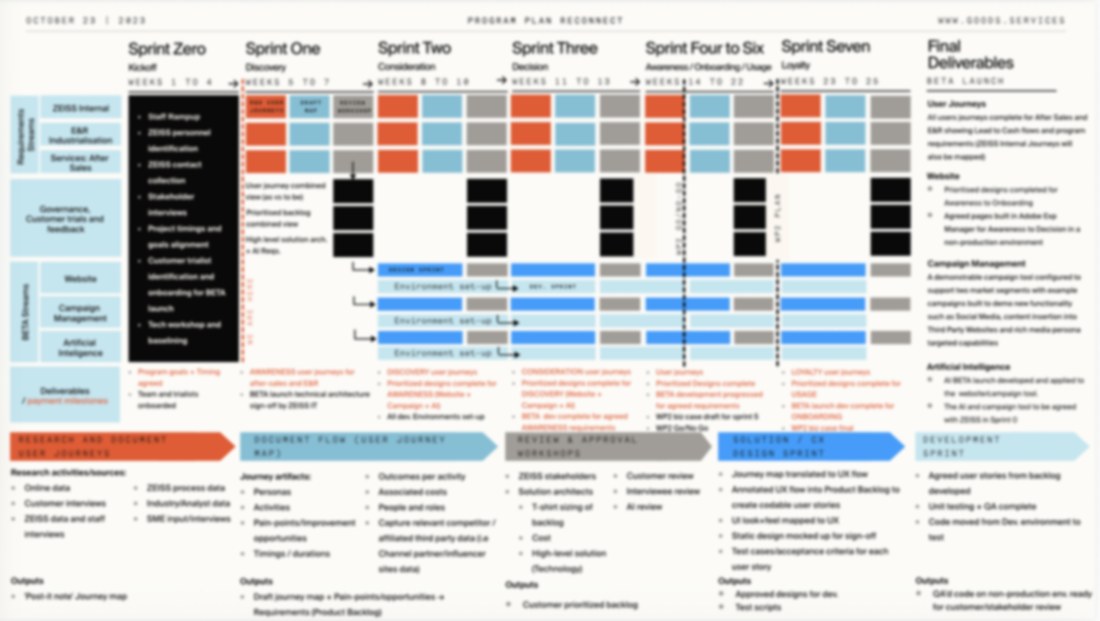
The ZEISS Eagle programme plan · ZEISS Outputs
Scope · data request · research plan · stakeholder map · success measures
-
02
Discovery
Look at the service through four lenses, so no single account of it goes unchallenged.
Activities
- Customer — interviews and journey research
- Data — analytics, sales and service data
- Stakeholder — cross-functional interviews
- Market — competitors and benchmarks
- Operational immersion — watching the work, not hearing it described
- Synthesis into themes: pain points and opportunities
A running log of the top themes is kept as the interviews land, rather than waiting for one synthesis at the end.
Example output
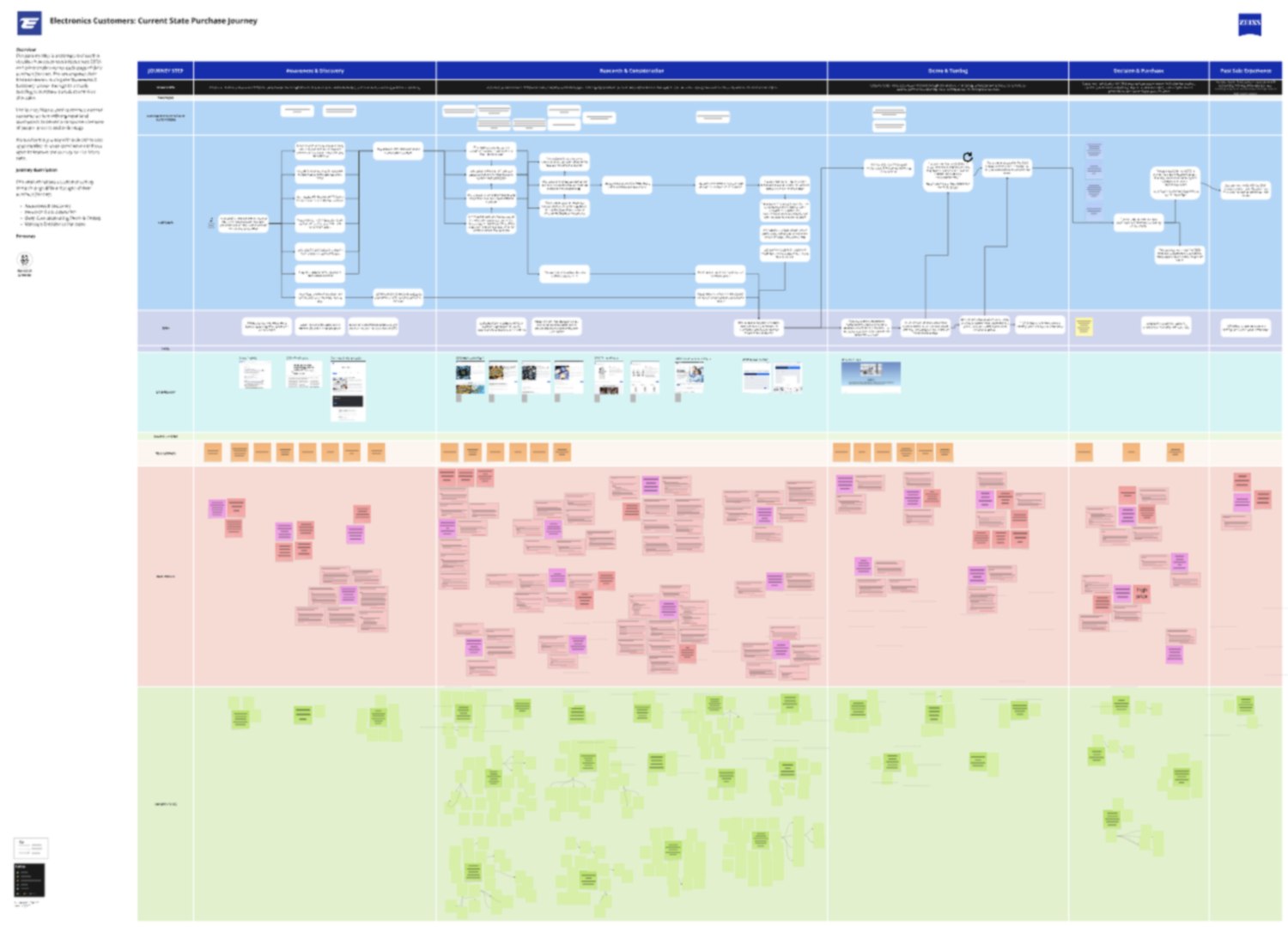
Service blueprint from discovery · ZEISS Electronics Outputs
Interview findings · theme log · pain points and opportunities
-
03
Current state mapping
Make the whole system visible at once, so people are arguing about the same picture.
Activities
- Priority journeys agreed with the client, validated with users
- Mapped from both sides, customer and organisation
- Process mapping for internal workflows
- Systems, hand-offs and data flows under each step
- Pain points logged against the step they occur at
- Quantified where the data allows — volumes, drop-off, handling time
The blueprint carries customer steps, the organisation’s steps, the systems underneath, and swim lanes for pain points and opportunities.
Example output
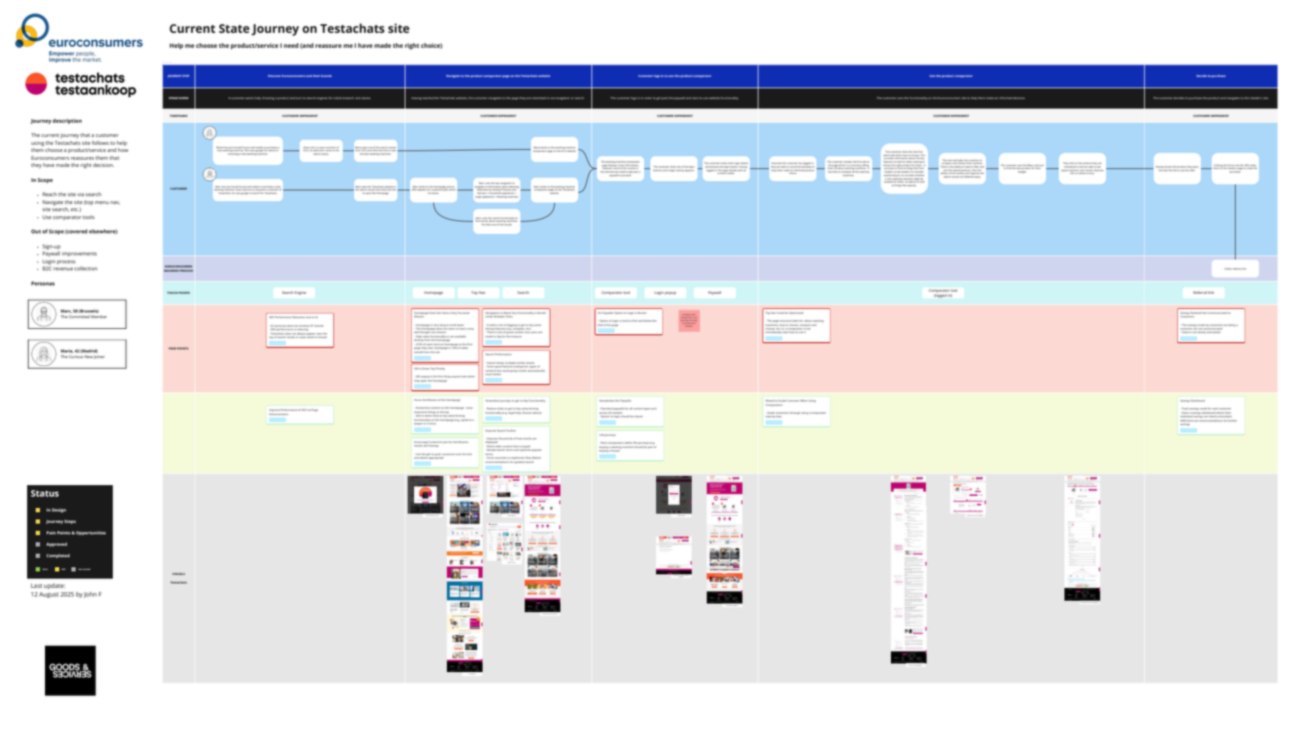
Current-state comparator journey · Euroconsumers Outputs
Journey maps · service blueprint · prioritised journeys
-
04
North Star Backlog
Set out everything the organisation could do, before deciding what it will.
Activities
- Opportunity themes grouped into strategic epics
- Epics arranged against the journey stages
- An initiative card per epic: impact and features
- Epics sized against each other, before costing
- Overlaps and dependencies named across epics
- Checked back against the blueprint for gaps
Deliberately not user stories. It sits between the strategy deck and the delivery backlog — fundable by leadership, breakable down by a team.
Example output
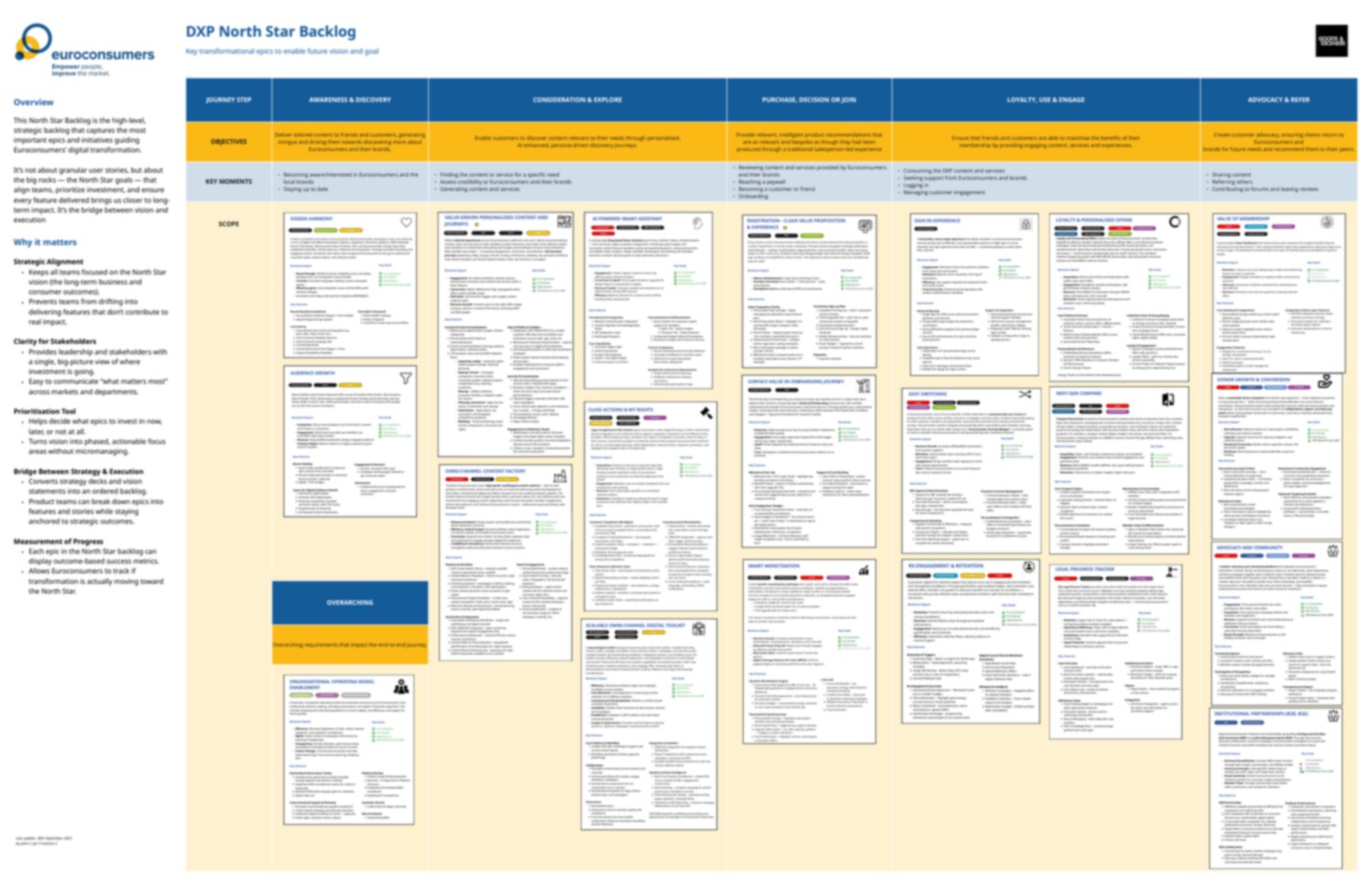
The North Star Backlog · Euroconsumers Outputs
North Star Backlog · initiative cards · features listed
-
05
Future state and operating model design
Design what the service should become, then test it before anyone commits to it.
Activities
- To-be journey mapping and future-state blueprint
- Operating model changes needed before shipping
- Design sprints per stage, and wireframes
- Clickable prototypes of the priority flows
- Feasibility tested with the engineering team
- Validated with users, and with the teams who will run it
The prototype is the specification. It is easier to argue with several linked screens than with a document no two people read alike.
Example output

Clickable prototype, built to field level · Vodafone Outputs
To-be journeys · future blueprint · prototypes · feasibility
-
06
Prioritisation, roadmap and business case
Decide what gets built, in what order, and make the case for paying for it.
Activities
- Value, requirement and operational complexity scored separately
- Operational constraints surfaced explicitly
- Dependencies mapped, releases shaped
- Benefits quantified against the success measures
- Options costed, including platform choice and doing nothing
- Cost, trade-offs and recommendation, put to the board
What goes first is what unlocks value soonest. The scorecard and the case go to the board together, workings visible, so a sponsor can argue with the weighting rather than the conclusion.
Example output
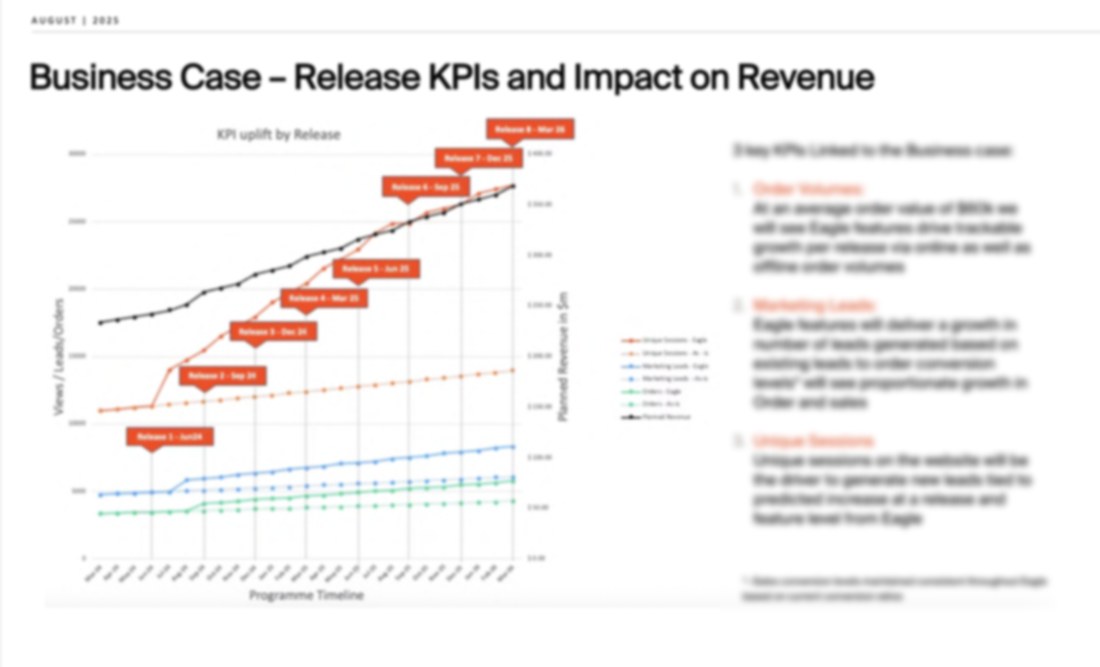
Release KPIs and the revenue case · ZEISS Outputs
Scorecard · prioritised roadmap · business case · funded scope
-
07
Change and adoption
Get the organisation ready for what is coming.
Activities
- Impact assessment across affected teams and roles
- Process and policy changes, each with an owner
- Communications sequenced against the release plan
- Training written for the people who will use it
- Champions identified inside each affected team
- Readiness check, with authority to delay go-live
Adoption is where the business case either lands or does not. It is planned before release rather than after it.
Example output
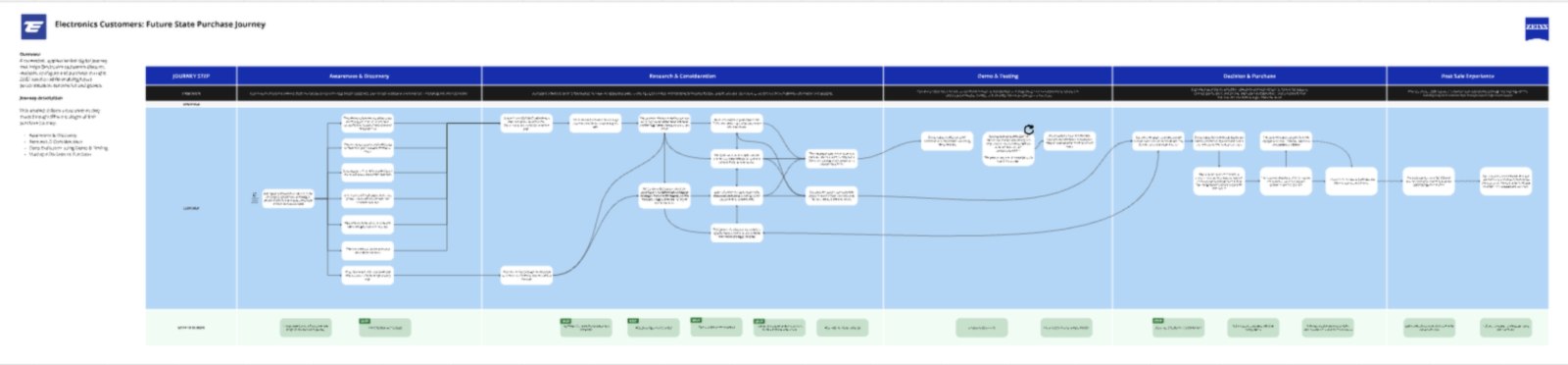
The to-be journey the teams had to be ready for · ZEISS Electronics Outputs
Impact assessment · comms and training plan · adoption measures
-
08
Delivery
Build it in cycles, and own what ships.
Activities
- Research re-tested before each build
- Features, stories and acceptance criteria
- Backlog ownership, the board and the standups
- Design iterated with the team through build
- Prioritisation with client leadership
- Staged releases, measured against the criteria
It runs as a cycle, not a handover. Each pass checks that what discovery established still holds.
Example output
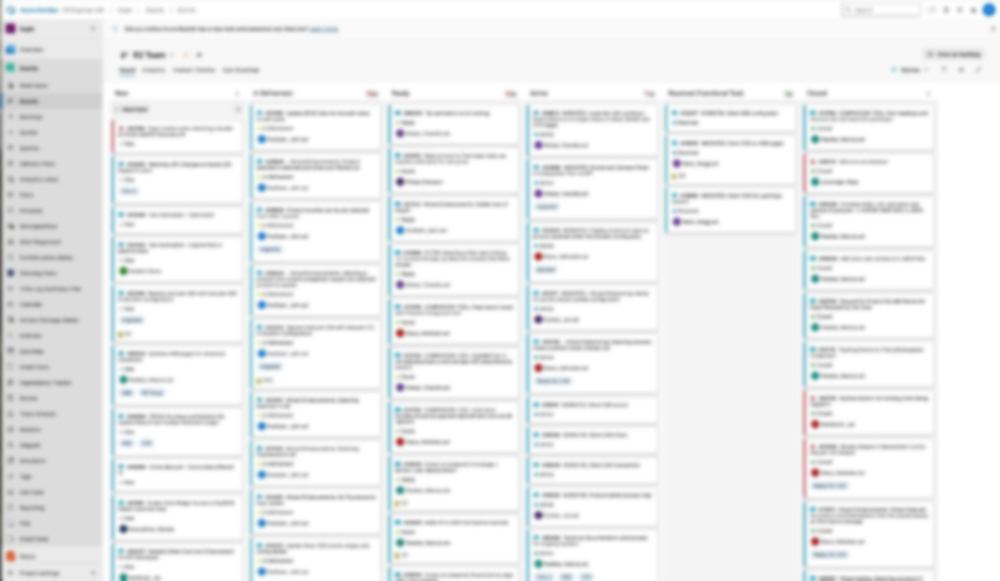
User stories and acceptance criteria · ZEISS Outputs
Requirements and backlog · working releases · measured outcomes
-
09
Post release review and learn
The engagement ends. The service does not.
Activities
- Benefits reviewed against the business case, including the misses
- Backlog refreshed from live behaviour
- Changed themes fed back into the North Star Backlog
- Handover, so the client’s team can carry it without me
- The next cycle scoped from what the service does
This is where the loop closes. What the service does once people use it is better evidence than anything gathered in discovery.
Example output
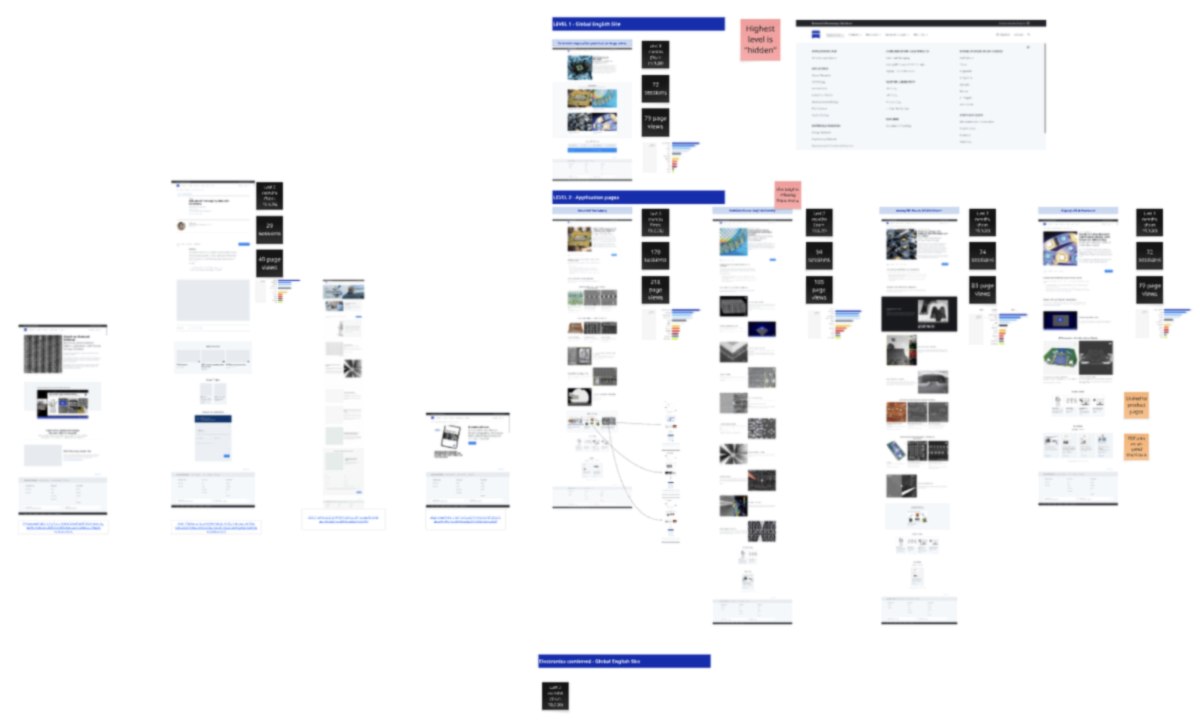
Current-state analysis of the live global site · ZEISS Electronics Outputs
Benefits review · refreshed backlog · handover